When you purchase through links on our site , we may earn an affiliate commission . Here ’s how it work .
Genetic changes that apparently allow humans to subsist longer than any other high priest may be rootle in a more carnivorous diet .
These changes may also promote brain ontogenesis and make us less vulnerable to disease of aging , such as Cancer the Crab , philia disease and dementia .

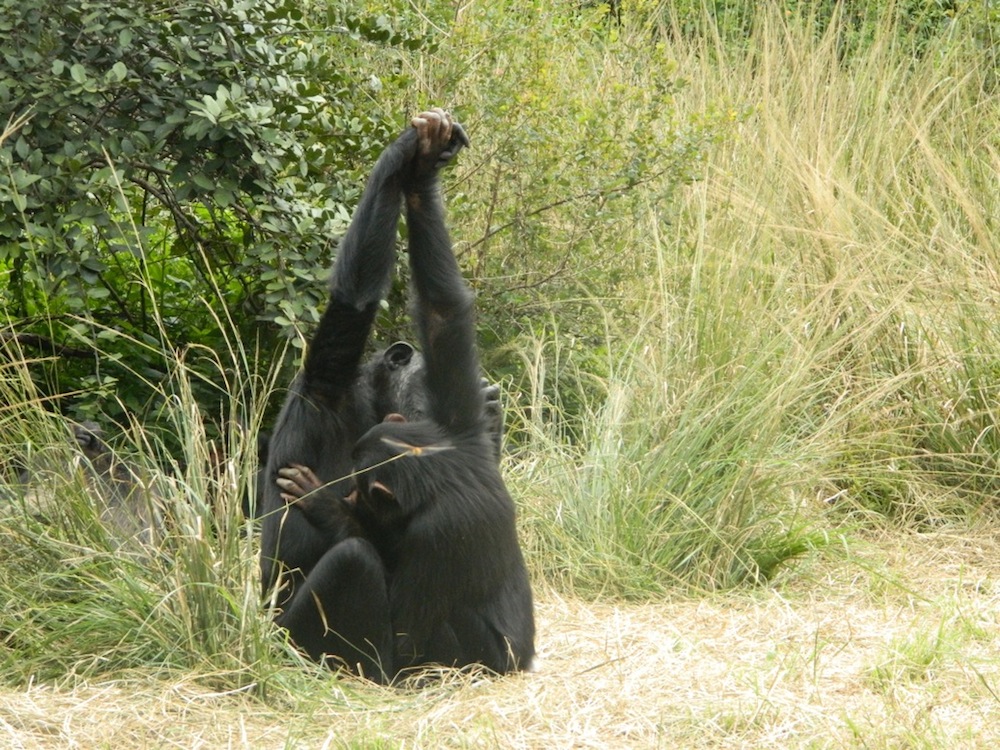
Chimps and apes are genetically so similar to humans - and their human-like gestures do remind us how close we are on the family tree - that scientists have long been puzzled why they don’t live as long as we do. Diet-related evolutionary changes may explain it. Image
chimp and great apes are genetically like to humans , yet they seldom live for more than 50 years . Although theaverage human lifespanhas doubled in the last 200 years — due largely to decreased babe fatality rate related to approach in diet , environment and medicine — even without these improvement , people inhabit in high mortality hunter - forager life-style still have twice the life story anticipation at birthing as uncivilized chimpanzees do .
These key remainder in lifetime may be due to gene that human race evolved to adapt well to meat - rich diets , life scientist Caleb Finch at the University of Southern California in Los Angeles suggested .
Mmmm … raw , red meat

The oldest known stone tool invent by the ancestors of mod humans , which date back some 2.6 million years , apparently aid slaughter animate being clappers . As our precursor evolved , they became better atcapturing and digesting meat , a worthful , eminent - Energy Department food for thought , by increasing brainiac and body size and reduce gut size .
Over time , deplete red heart and soul , especially raw flesh taint with parasites in the epoch before preparation , stimulates inveterate inflammation , Finch excuse . In response , humans apparently evolve unique variants in a cholesterin - transporting factor , apolipoprotein E , which regulate chronic inflammation as well as many aspect of aging in the brainiac and arteria .
One variant receive in all New human populations , get laid as ApoE3 , go forth roughly 250,000 year ago , " just before the terminal leg of evolution ofHomo sapiensin Africa , " Finch explain .

ApoE3 let down the peril of most aging diseases , specifically heart disease and Alzheimer ’s , and is linked with an increased life .
" I hint that it arose to lower the risk of degenerative disease from the gamy - adipose tissue marrow diet they ware , " Finch told LiveScience . " Another welfare is that it promoted brain development . "
mystifier remains

Curiously , another more ancient variate of apolipoprotein E found in a lesser degree in all human population is ApoE4 , which is linked with high cholesterol , abridge lifespan and degeneration of the arteries and brain .
" The puzzle is , if ApoE4 is so bad , why is it still present ? " Finch asked . " It might have some protective force under some fortune . A little bit of data suggests that with hepatitis C , you have less liver damage if you have ApoE4 . "
Finch detail these finding in the December issue of Proceedings of the National Academy of Sciences Early Edition .