When you purchase through connection on our site , we may pull in an affiliate military commission . Here ’s how it work .
The ozone hole over the Antarctic is probable to start contracting in the future and might disappear by 2050 because of a reduction in the release of CFC and other ozone - depleting gases , consort to a team of Japanese scientists .
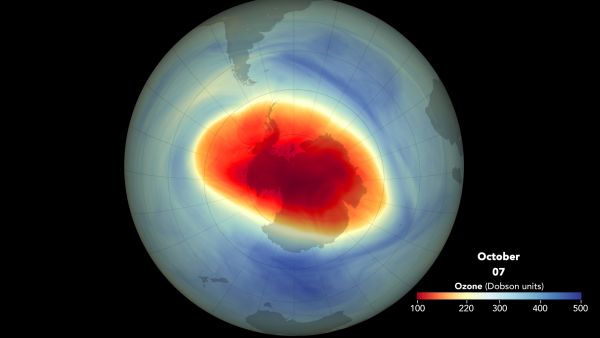
That would be a in force thing . Ozone in the upper atmosphere shields the major planet from spare ratiation . The hole , monitored by planet and ground stations since its discovery in the 1980s . is an area of use up ozone , thought to have been created by CFC unblock into the atmosphere .

The ozone hole over Antarctica in 2005.
Chlorofluorocarbon levels in the Earth ’s atmosphere have been decline since the mid-1990s due to international efforts to reduce emissions .
The new finding are found on a series of numerical simulations carried out by Eiji Akiyoshi of the National Institute for Environmental Studies , near Tokyo , using projected discharge of chlorofluorocarbons and other gas blame for the ozone hollow .
According to a reputation posted Friday on the institute ’s web site , the mess is at its largest now but is likely to gradually bulge contracting around 2020 and disappear by around 2050 .

The squad ’s findings are in line with enquiry by other scientists , let in a favorable expectation from U.S. scientist published in the journalNatureearlier this month .
Some , however , have suggest the hole wo n’t mend until much later because old refrigerator and aviation - conditioning system — many in the United States and Canada _ are still releasing ozone - killing chemical . Both countries moderate those chemicals in newer products .
The Associated Press and LiveScience Staff contributed to this written report .